The Essential Toolbox
Core Enzymes in Molecular Biology
Behind every breakthrough in genetic engineering and molecular diagnostics lies a set of specialized enzymes. These powerful biological catalysts are the backbone of genetic research and modern biotechnology, enabling critical processes from basic DNA replication to recombinant DNA technology and gene expression studies.
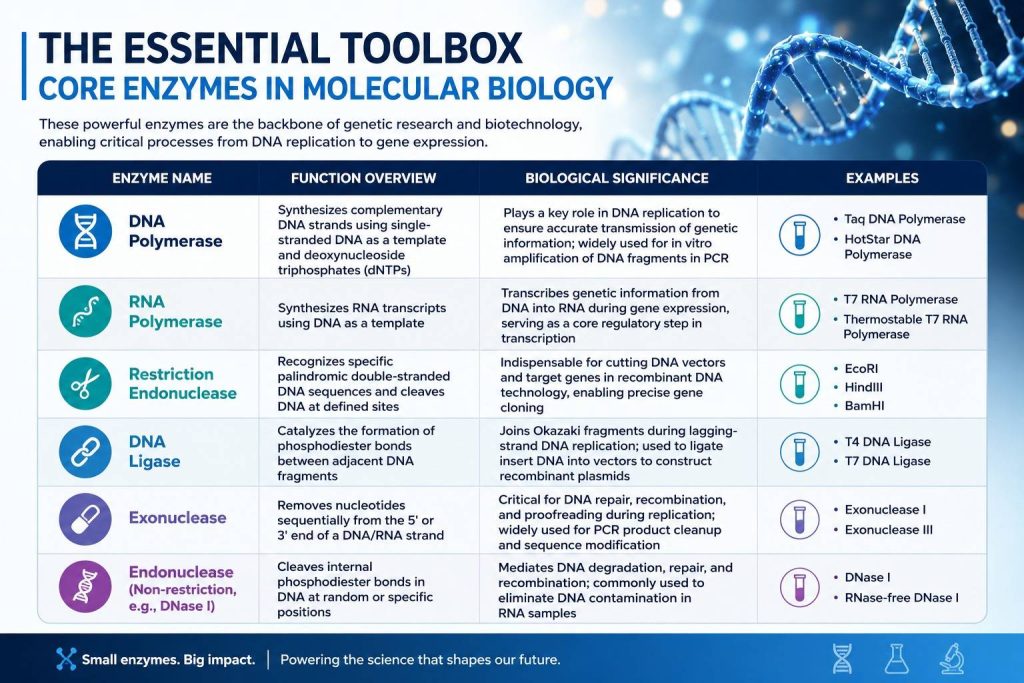
The table below breaks down their key functions, biological roles, and common applications in the laboratory:
| Enzyme Name | Function Overview | Biological Significance | Examples |
|---|---|---|---|
| DNA Polymerase | Synthesizes complementary DNA strands using single-stranded DNA as a template and deoxynucleoside triphosphates (dNTPs). | Plays a key role in DNA replication to ensure accurate transmission of genetic information; widely used for in vitro amplification of DNA fragments in PCR. | |
| RNA Polymerase | Synthesizes RNA transcripts using DNA as a template. | Transcribes genetic information from DNA into RNA during gene expression, serving as a core regulatory step in transcription. | |
| Restriction Endonuclease | Recognizes specific palindromic double-stranded DNA sequences and cleaves DNA at defined sites. | Indispensable for cutting DNA vectors and target genes in recombinant DNA technology, enabling precise gene cloning. | |
| DNA Ligase | Catalyzes the formation of phosphodiester bonds between adjacent DNA fragments. | Joins Okazaki fragments during lagging-strand DNA replication; used to ligate insert DNA into vectors to construct recombinant plasmids. |
|
| Exonuclease | Removes nucleotides sequentially from the 5′ or 3′ end of a DNA/RNA strand. | Critical for DNA repair, recombination, and proofreading during replication; widely used for PCR product cleanup and sequence modification. | |
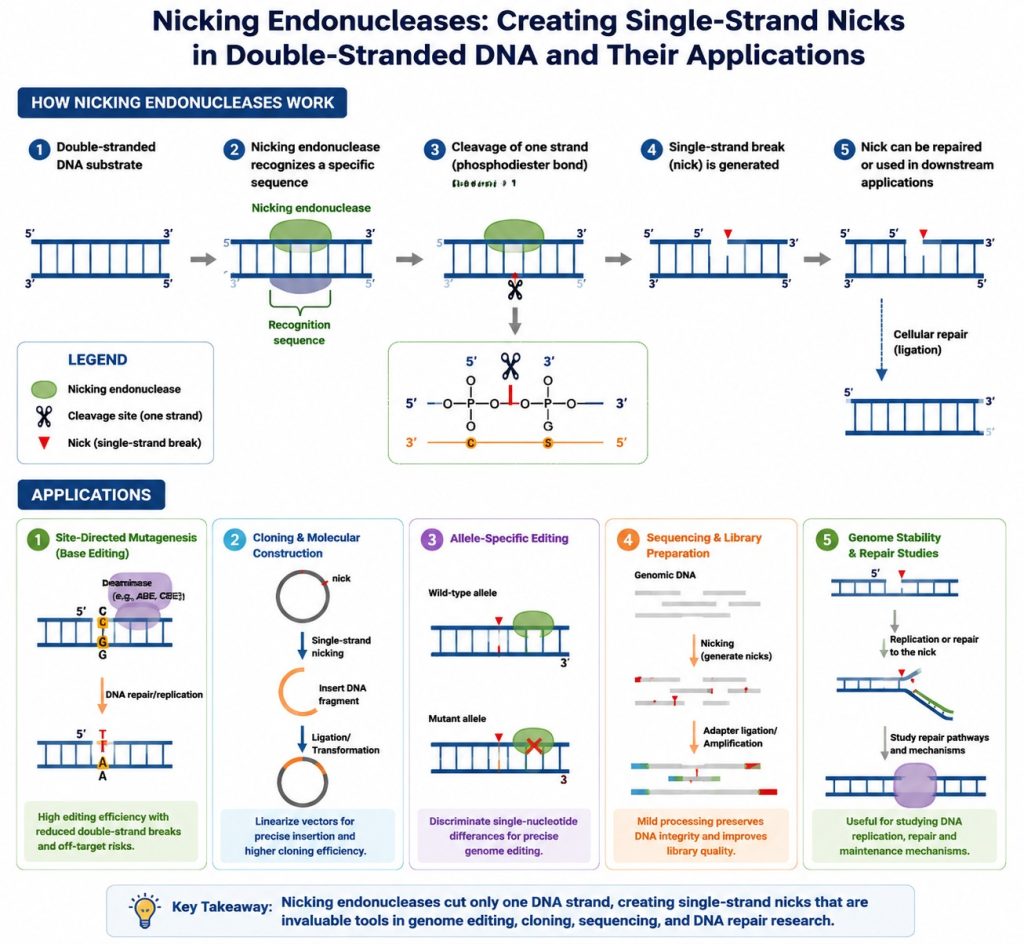
| Endonuclease (Non-restriction, e.g., DNase I) |
Cleaves internal phosphodiester bonds in DNA at random or specific positions. | Mediates DNA degradation, repair, and recombination; commonly used to eliminate DNA contamination in RNA samples. |
Small enzymes. Big impact.
Powering the science that shapes our future.
more:
- What is the difference between Exonuclease and Endonuclease?
- Why is Taq Polymerase used in PCR?