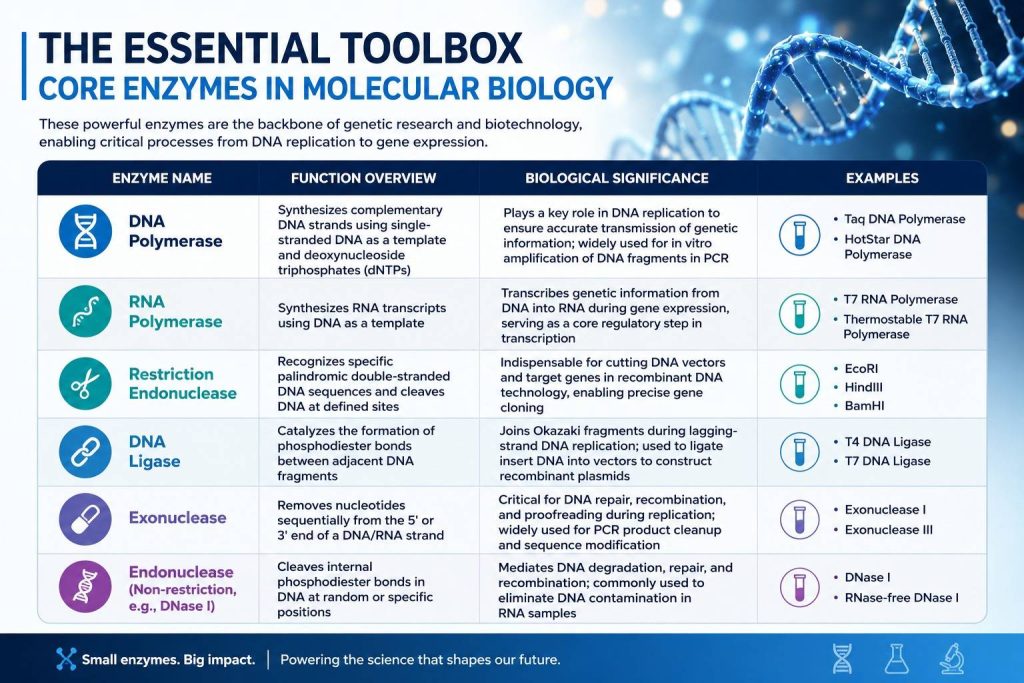
In the world of molecular biology, the stability of enzymes is a critical factor that dictates the efficiency of laboratory workflows and the cost-effectiveness of diagnostic kits. Among these enzymes, RNase A is indispensable for its ability to specifically degrade RNA contamination during DNA and protein purification.
What is RNase A and How Does It Work?
RNase A is a highly efficient ribonuclease that targets single-stranded RNA (ssRNA). It works by catalyzing the hydrolysis of the phosphodiester bond between the 5′-ribose of a nucleoside and the phosphate group of the 3′-ribose of an adjacent pyrimidine (Cytosine or Uridine).
This enzymatic reaction produces 2′, 3′-cyclic phosphate intermediates, which are further hydrolyzed into 3′-nucleoside phosphates. Because of this specificity, RNase A is the gold standard for removing RNA residues in plasmid extraction and genomic DNA purification.
The Advantage of Recombinant Production (Animal-Free)
Traditionally, RNase A was extracted from bovine pancreases. However, this method presents two significant drawbacks:
- DNase Contamination: Animal-derived RNase A often contains residual DNase, which can inadvertently degrade your target DNA and reduce yields.
- Safety Concerns: Use of animal-derived components poses risks in regulated environments.
Tinzyme’s Recombinant RNase A is produced using a specialized yeast expression system. This ensures:
- Zero DNase Activity: High-purity enzymes that protect your DNA samples.
- Animal-Free Process: No animal-derived components are used at any stage of production, making it ideal for gene therapy and cell therapy applications.
Redefining Stability: 4 Months at Room Temperature
The biggest challenge for kit manufacturers is the thermolability of enzymes. Most molecular enzymes require cold-chain logistics, which increases transportation costs and complexity.
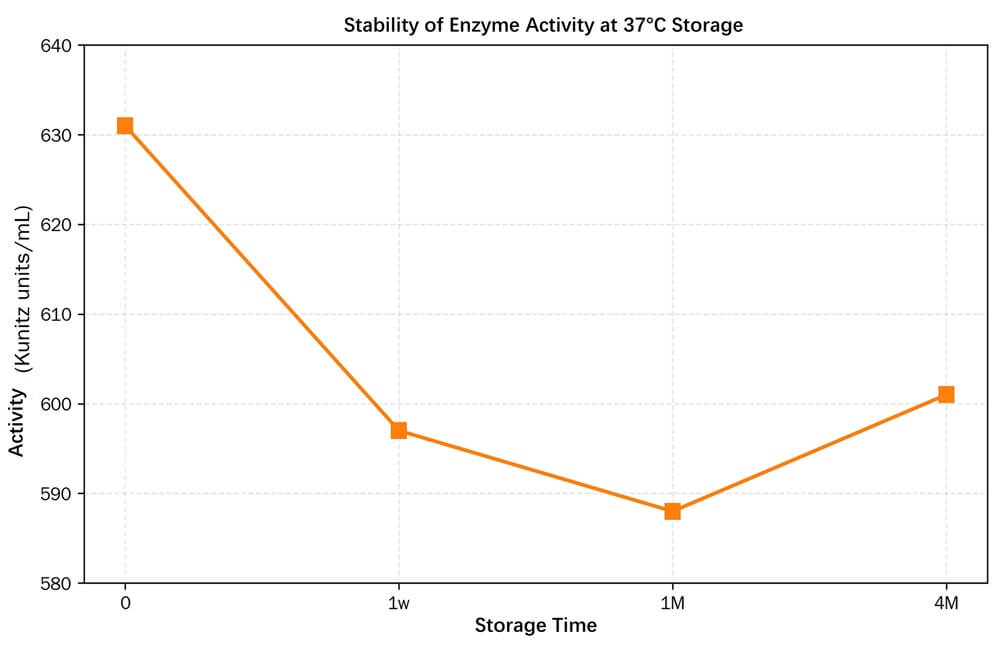
To solve this, Tinzyme has optimized its RNase A Solution (Cat. No. RA02) for maximum stability. Our long-term testing confirms that this recombinant solution remains fully stable and active for over 4 months at:
Room Temperature (25°C)
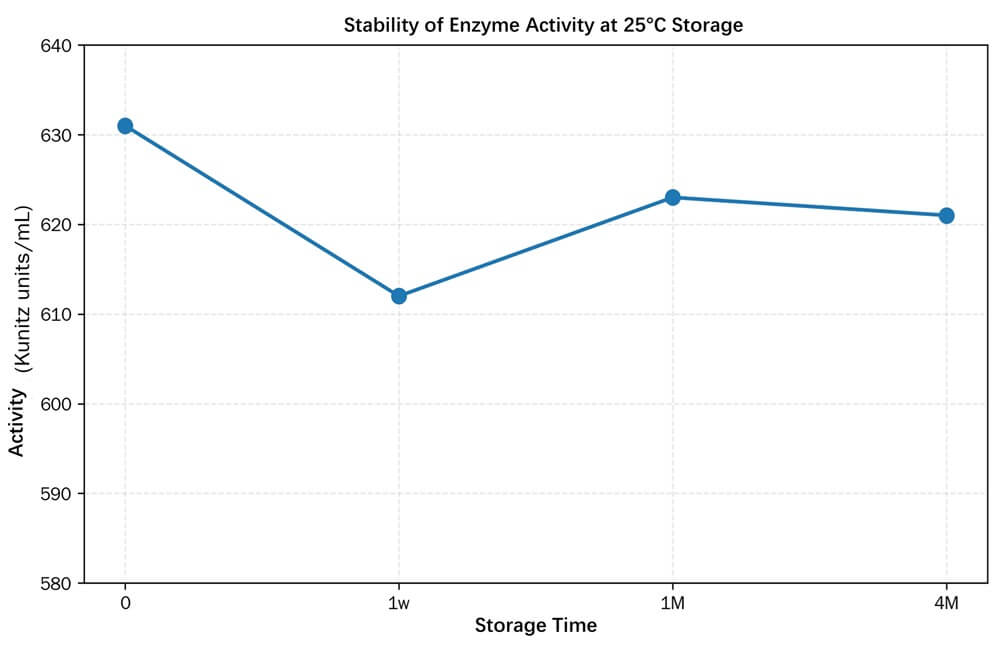
Elevated Temperatures (37°C)
Why This Matters for Your Business
- Simplified Logistics: No need for dry ice or specialized cold-chain shipping.
- Kit Optimization: Allows for the entire nucleic acid extraction kit to be stored and transported at ambient temperatures.
- Reliability: Guaranteed enzymatic efficiency even if temperature fluctuations occur during transit.
Conclusion
Tinzyme’s Recombinant RNase A Solution combines high-performance purity with industry-leading thermal stability. By eliminating DNase contamination and the need for refrigeration, we provide a robust, cost-effective solution for researchers and kit manufacturers worldwide.
Experience the stability of Tinzyme RNase A today.